
Overview of Water Dispenser Heating Tube Variants
A practical reference for comparing heating tube structures, material choices, and project details when selecting parts for different water dispenser designs.
Read ArticleOEM Heating Element Supply
Angel Heater supplies stainless steel immersion heating tubes for water dispenser tank assemblies, replacement programs, and appliance production projects that require stable dimensions, repeatable electrical parameters, and practical customization.
For buyers sourcing a custom water dispenser heating element, the tube can be reviewed around voltage, wattage, pipe diameter, heating length, material grade, terminal direction, and mounting structure before sample confirmation.
As a water dispenser heating tube manufacturer, Angel Heater supports household, commercial, and larger dispenser platforms with project-based stainless steel pipe options and RFQ communication for repeated supply.
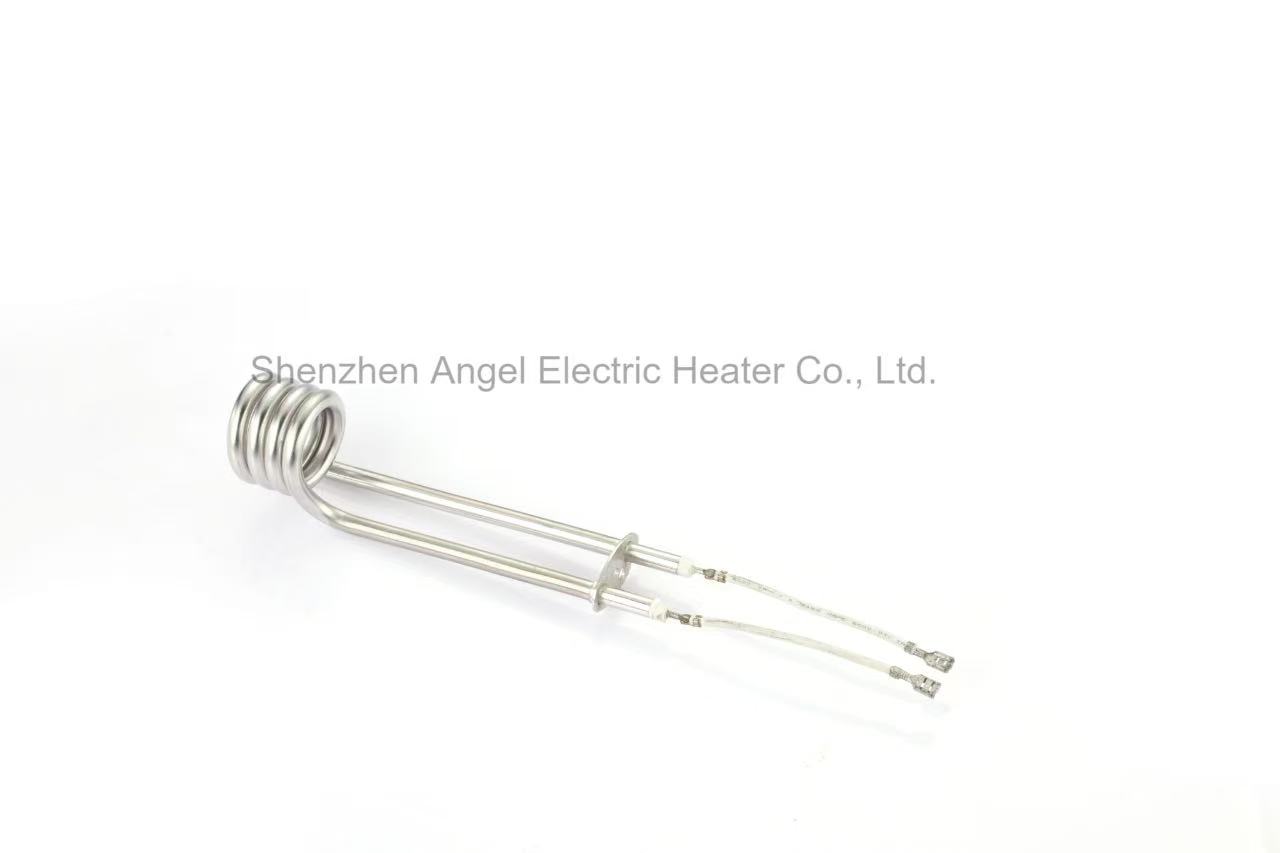
This water dispenser heating tube is designed for immersed heating inside dispenser tank assemblies. The long handle structure supports practical installation and removal, while stainless steel material options allow buyers to match the heating element to water-contact conditions, tank geometry, and appliance platform requirements.
| Product Type | Water dispenser heating tube, long handle type |
|---|---|
| Primary Application | Household and commercial water dispenser tank heating |
| Standard Material | SUS304 stainless steel |
| Optional Materials | SUS316L, INC840, INC800 according to project conditions |
| Rated Voltage | AC 100-120V or AC 220-240V |
| Rated Power | 300W-1500W |
| Maximum Operating Temperature | 100°C for water heating conditions |
| Pipe Diameter | 6.6 mm or 8.0 mm options |
| Heating Length | Customized according to dispenser tank layout |
| RFQ Review Items | Drawing, sample photo, mounting space, terminal form, target market, packing request |
A practical reference for comparing heating tube structures, material choices, and project details when selecting parts for different water dispenser designs.
Read ArticleThis article outlines how appliance teams can balance heat output, water-contact material, insulation behavior, and stable assembly conditions.
Read ArticleA useful guide for checking mounting position, tank clearance, electrical connection, and sample validation before moving into batch procurement.
Read ArticleFive stars
The sample dimensions matched our dispenser tank drawing closely, and the resistance values were easy for our engineering team to compare during incoming checks.
Procurement Manager, Appliance OEM, Turkey
Five stars
Angel Heater helped us confirm material and wattage options before quotation, which made our distributor replacement program easier to standardize.
Category Buyer, Water Equipment Distributor, United Arab Emirates
Five stars
The quotation discussion covered pipe diameter, terminal direction, and packing details, so our pilot build had fewer open technical questions.
Senior Sourcing Engineer, Commercial Dispenser Brand, Mexico
Procurement teams should confirm tank volume, working voltage, target wattage, pipe diameter, heating length, mounting space, terminal direction, water quality, and whether the assembly needs a long handle, flange, bracket, or project-specific bend.
SUS304 is commonly used for many water dispenser heating tube projects. SUS316L, INC840, or INC800 can be evaluated when the equipment faces different corrosion conditions, heating loads, or buyer-side material standards.
Wattage affects heat-up speed, load on the electrical system, and surface heat density. A balanced selection should match the water tank size, thermostat strategy, insulation design, and allowable current of the appliance platform.
Yes. Heating length, pipe diameter, bend shape, terminal position, and mounting details can be reviewed against tank drawings or samples so the tube fits the equipment without interfering with sensors, baffles, or service access.
Engineers should check dimensional fit, cold resistance, insulation resistance, leakage current, terminal firmness, heating uniformity, water sealing points, and compatibility with the dispenser control system under normal operating conditions.
A clear RFQ should include drawings, photos, annual demand estimate, voltage, wattage, material preference, pipe diameter, heating length, connection type, packing requirements, target market, and any buyer-side inspection checklist.